
Product
Reverse-specify, refactor, evolve. Without a wrong note.
Lyriks covers the whole life cycle of your software, whoever wrote the code, human or AI. From existing code to every release, each element is linked to its source and every change is verified.
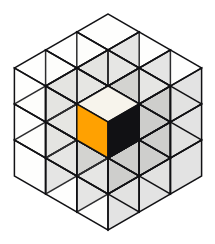
The cycle, at every change
- 01Code, docs, JiraYour sources, as they are
- 02360° specReverse-specified, alive
- 03ChangeSimulated, with its impact report
- 04Your LLM codesWith the spec and its rules
- 05Lyriks verifiesRule by rule, deterministic
Every gap goes back to the LLM, until 100% conformance.
Reverse specification
Your code becomes a spec you master.
Lyriks reads your code, your documentation, or both, and recovers one spec that covers it all: behaviour and business rules, but also architecture, data and integrations. Each rule is linked to the line of code that plays it. Your teams validate it, and the spec lives next to the code from then on.
In the spec · product and behaviour
- Features and journeys
- Actions and business rules
- Screens
- Business objects and attributes
- Invariants
- Testable requirements
In the spec too · architecture and data
- Architecture and modules
- Dependencies
- Data model
- APIs and interfaces
- Processing flows
- Integrations and technologies
An LLM gives you 70 pages of Markdown. Lyriks gives you control.
Knowledge base
Seven tools, seven truths. Lyriks makes it one.
Code, Jira, Confluence, Notion, Figma, GitHub: each tool holds its own version of the project. Lyriks brings them into a single base, a graph rather than a RAG, then flags contradictions with their sources.
Inconsistency detected · example
- JiraRefund within 14 days
- ConfluenceRefund within 30 days
- Code · refund.pyRefund within 21 days
Three sources, three deadlines. Flagged before a customer finds out.
Explainable
All the knowledge, in the form each person reads.
Structured text, journeys, graphs, tables: business and tech read the same spec. Every element points to its source, every gap cites the rule it checks. You can audit it, challenge it or defend it.
Simulation and impact report
Before you write a line, you know what breaks.
A change starts as a need, becomes a solution, then a functional and technical spec. Lyriks computes how it fits with the existing system and with the other changes running in parallel.
Three changes crossed with the existing system · fictional example
| Accounts | Billing | Catalog | Sign-up | |
|---|---|---|---|---|
| Family sharing | compatible | conflict | untouched | compatible |
| Student plan | compatible | compatible | compatible | to decide |
| Pay in 3 installments | untouched | conflict | untouched | untouched |
“Family sharing” and “Pay in 3 installments” contradict each other on billing. You know before the first line of code.
Verification
Same code, same spec, always the same verdict.
The validated spec goes to your LLM with all its rules and their sources. Lyriks checks the result with its deterministic engine and produces an implementation report with every release.
Every gap goes back to the LLM with its rule and source. The loop runs until 100%.
- ConformantImplemented as specified
- AdditionAdded without being asked
- OmissionSpecified, not implemented
- RegressionExisting behavior broken
Agents and memory
Your agents play from the right score.
Through MCP, Claude Code, Cursor or Copilot receive the spec, its rules and their sources from the very first prompt. Lyriks also pushes to Jira, GitHub or Figma.
- MCP
- Claude Code
- Cursor
- Copilot
- Jira
- GitHub
- Figma
Models come and go, memory stays. It belongs neither to a developer nor to an LLM: it is company property, installed on your servers, exportable in full.
Deterministic
Same input, same verdict.
The Lyriks engine is built on graph rewriting, developed in-house. It computes, it does not guess: the same question always gets the same answer. That is what makes a verdict defensible in front of a team, a client or an auditor.
See use cases